Tire News & Information
Load Range E Explained: What It Means & Why It Matters

Free shipping
Best price guarantee
SimpleCrew exclusive savings
0% APR Financing
Tire replacement coverage
24/7 roadside assistance
Easy returns
Tire News & Information
Tire load ratings play a crucial role in ensuring your vehicle's safety and performance, especially when carrying heavy loads or towing. Among the various ratings available, load range e stands out for its superior strength and durability.
Load range e refers to a tire’s maximum load-carrying capacity at a specific inflation pressure, typically 80 PSI. These tires are specifically engineered for heavy-duty applications where structural integrity is paramount.
Key Features of Load Range E Tires:

The load e tire rating indicates that the tire is designed for "Heavy Load" (HL) or "Light Truck" (LT) applications. While older tires used actual plies of cotton or nylon, modern load range e tires use fewer, stronger layers of steel and synthetic polymers to achieve the same 10-ply equivalent strength. This rating ensures the tire can handle the heat and stress generated by heavy-duty hauling without deforming or failing.
Vehicles built for demanding tasks often depend on load range e—particularly 3/4 ton and 1-ton pickup trucks. These trucks frequently encounter the challenge of carrying heavy loads or towing, making the durability and strength of these tires indispensable. The enhanced load capacity ensures they meet the rigorous demands of such vehicles.
In addition to trucks, larger SUVs and vans that regularly bear significant weight also benefit from the robust capabilities of these tires. These vehicles, often used for transporting multiple passengers or heavy cargo, require tires that deliver both stability and endurance. Trailers, especially those designed for hauling heavy equipment or livestock, typically utilize these tires as well to maintain structural integrity under stress.
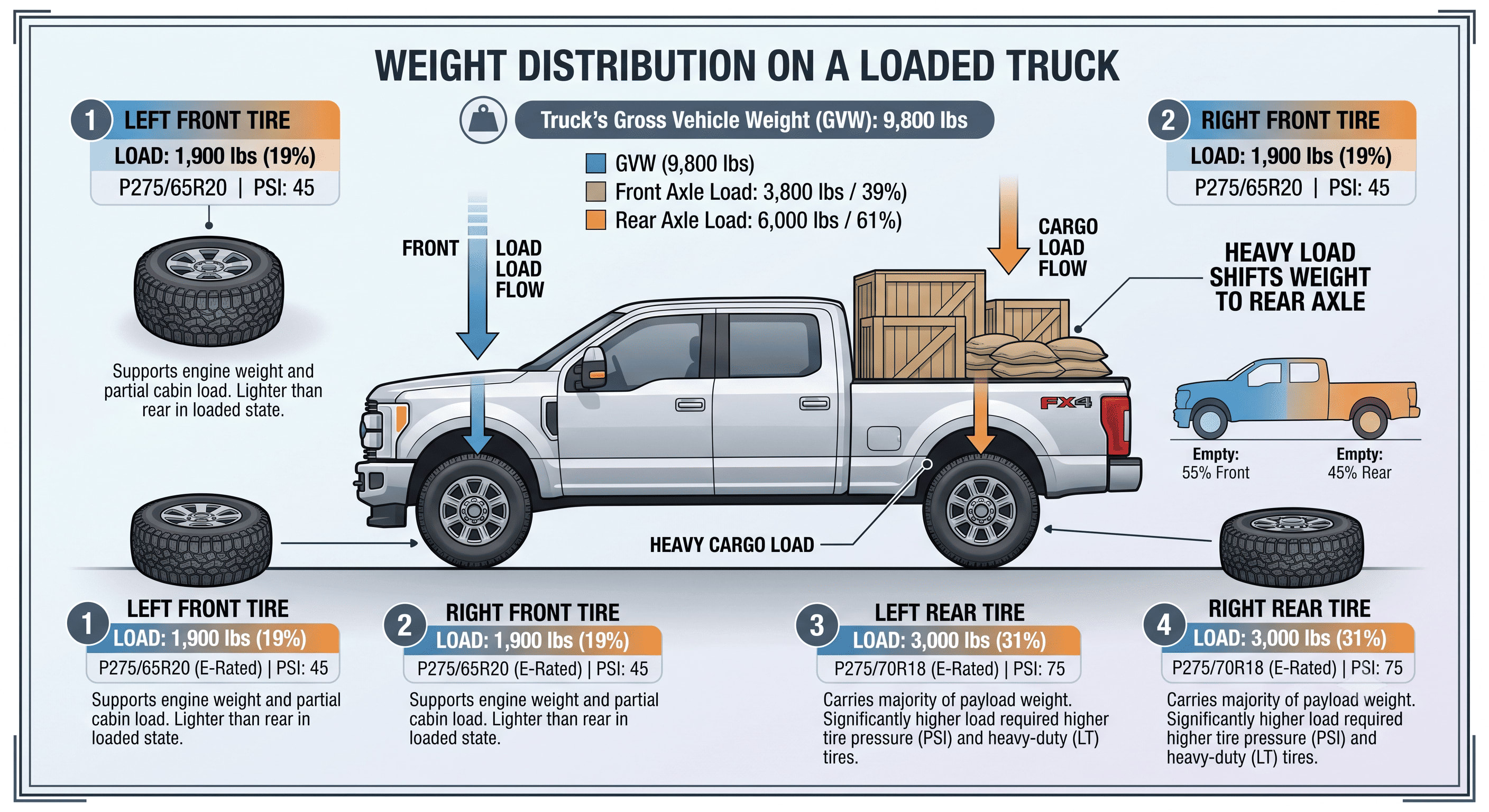
Load range e weight capacity is one of the highest available for light trucks and SUVs. Typically, these tires can handle a significant amount of weight, ranging from 3,000 to 3,500 pounds per tire when inflated to their recommended pressure. This robust capacity ensures that vehicles maintain stability and safety under heavy load conditions.
Referencing the load index number of your tires and matching it with your vehicle's weight specifications is essential. While these tires offer exceptional capacity, it's vital to remain within your vehicle's Gross Vehicle Weight Rating (GVWR) and Gross Axle Weight Rating (GAWR) to avoid loading limits that could compromise performance.
Tires with a load range e excel in supporting substantial weights compared to those with C and D ratings, which are commonly used in light trucks and standard SUVs. The construction is the primary differentiator; E-rated tires feature reinforced sidewalls that provide additional stability, ensuring dependable handling when carrying substantial loads.
However, this rigidity might result in a firmer ride, as the stiffer sidewalls can transmit more road feedback into the cabin. Despite this, the enhanced stability is a significant advantage for those prioritizing safety. In scenarios where vehicles need even more capacity, options like F load range tires exist for intense commercial applications. Conversely, standard passenger vehicles typically use basic load ratings designed for a comfortable balance between cushioning and everyday performance.
Selecting the right tires involves evaluating the typical demands placed on your vehicle. If you frequently haul trailers or use all-terrain tires for work, load range e tires offer the necessary durability.
To ensure compatibility, refer to the information provided by your vehicle's manufacturer on the door placard or owner's manual. Your driving habits and comfort expectations are also important; because these tires are engineered for stability, they may result in a firmer ride. Engaging with a tire specialist can help you balance your need for load capacity with your desired ride comfort.
Ensuring that load range e tires are inflated to their correct pressure is essential for optimal performance. These tires are designed to operate at higher pressures than standard tires, typically needing around 80 PSI to handle their full weight capacity.
Failing to maintain this pressure can lead to excessive flexing and heat build-up. It is important to regularly check and adjust tire pressures before embarking on trips that involve heavy loads. Using a dependable tire pressure gauge ensures your tires are inflated correctly, enhancing safety and extending tire life.
At SimpleTire, we understand the importance of selecting the right tires for your specific needs. If you're ready to find the perfect set of load range e tires, shop for tires online with us today to discover the best deals for your vehicle.
In modern tire manufacturing, they are the same. "10-ply" is a legacy term referring to the strength of the tire, while "Load Range E" is the current industry standard for that strength rating.
Yes, you can, but be aware that the ride will feel significantly stiffer. Many owners of half-ton trucks upgrade to these tires to improve stability while towing or to increase puncture resistance when driving off-road.
Search By